Posted Date : 21 Jul 2026
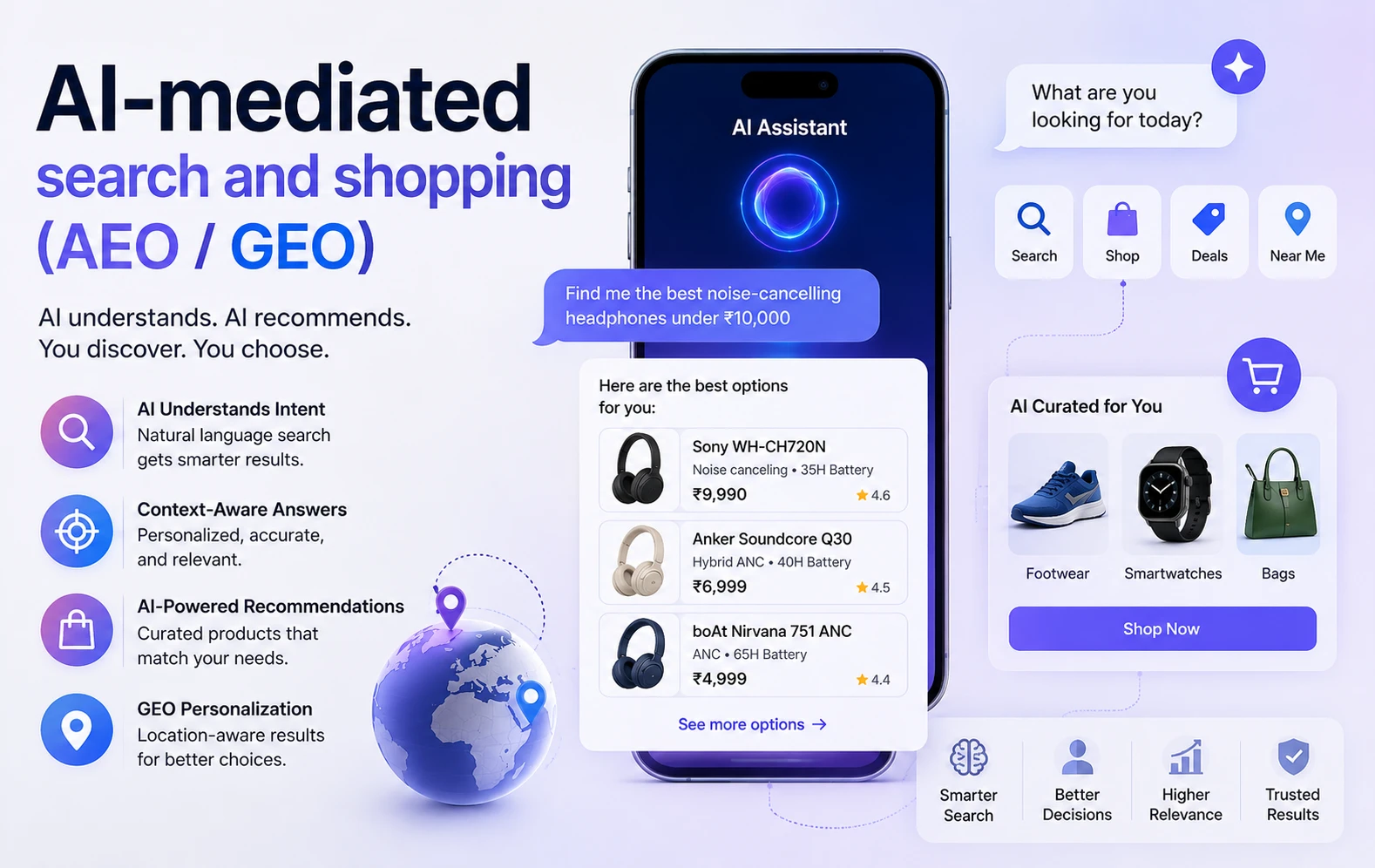
For two decades, performance marketing has been built around one assumption: a human types a query into a search bar, scans some results, and clicks. In 2026, that assumption is breaking down. AI agents are now browsing the web, comparing products, reading reviews, and making purchasing decisions on behalf of users across ChatGPT, Google AI Mode, Perplexity, and Microsoft Copilot.
If your marketing strategy was built for human browsers clicking through search results, it's already struggling to reach a fast-growing segment of your market. Welcome to the era of AEO (Answer Engine Optimization) and GEO (Generative Engine Optimization) — the new disciplines every performance marketer needs on their radar.
Traditional SEO optimizes for ranking on a results page a human will scroll through. AEO and GEO optimize for something different: being the answer an AI system chooses to cite, summarize, or recommend.
Search itself is becoming more conversational and intent-driven, with AI-powered engines prioritizing structured, authoritative content over simple keyword density. In 2026, it's not just about ranking—it's about being selected as the most relevant answer.
The emergence of agentic AI browsers—including AI-powered browser agents and in-browser assistants—introduces a category of user behavior traditional advertising platforms were never built to handle. These agents browse autonomously on a person's behalf, which means they encounter your website but don't interact with it the way a human visitor does. No scrolling. No hovering over a banner ad. No impulse click on a sidebar promotion.
That has real implications for how brands need to structure content and, increasingly, for how paid advertising works too. The paid layer is starting to catch up: sponsored placements are beginning to appear directly inside AI chat interfaces, with major brands already piloting labeled sponsored content inside conversational AI products.
Some brands have tried to opt out of this shift entirely, positioning themselves as "human-written, AI-free" in an attempt to differentiate. The data suggests this is a costly bet. One mid-market B2B SaaS company that took this approach saw organic traffic decline sharply over six months, while competitors cited in AI-generated overviews gained visibility share. Reversing course required a significant rewrite of existing content and months of lost pipeline before performance recovered.
The takeaway: refusing to optimize for AI-mediated search functions is a lot like refusing to optimize for search engines back in the early days of SEO—it sacrifices visibility without offering any real strategic upside. Being "AI-free" can still be part of your brand story and product positioning, but it can't be your content discoverability strategy.
Performance marketing has always chased wherever attention and intent are moving. Right now, both are moving toward AI-mediated discovery — agents that research, compare, and increasingly transact without ever generating a traditional pageview. Treating AEO and GEO as a niche technical concern rather than a core strategic pillar is a fast way to become invisible to a growing share of your addressable market.
Not sure how your brand currently shows up in AI-generated answers? Start by asking a few of the AI tools your customers actually use the questions they'd ask when researching your category—and see who gets cited instead of you.

Have a project in mind? Let’s build something amazing together.
Webbitech — A Leading Web Design & Web Development Company with 15+ Years of SEO & Digital Marketing Expertise, Delivering Countless Success Stories
From idea to execution, we help businesses create high-performing websites and applications.
Start your journey today and take your brand to the next level.