Posted Date : 08 Sep 2026
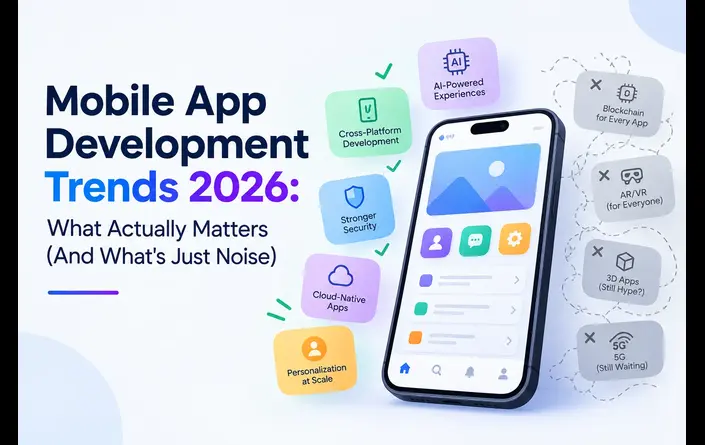
Every year brings a fresh list of "top mobile app trends"—most of them written by people who've never shipped an app past a demo. Here's the version grounded in what's actually changing in how apps get built, discovered, and monetized in 2026.
If you're a founder, product lead, or marketer trying to figure out where to put your budget this year, this is the honest read.
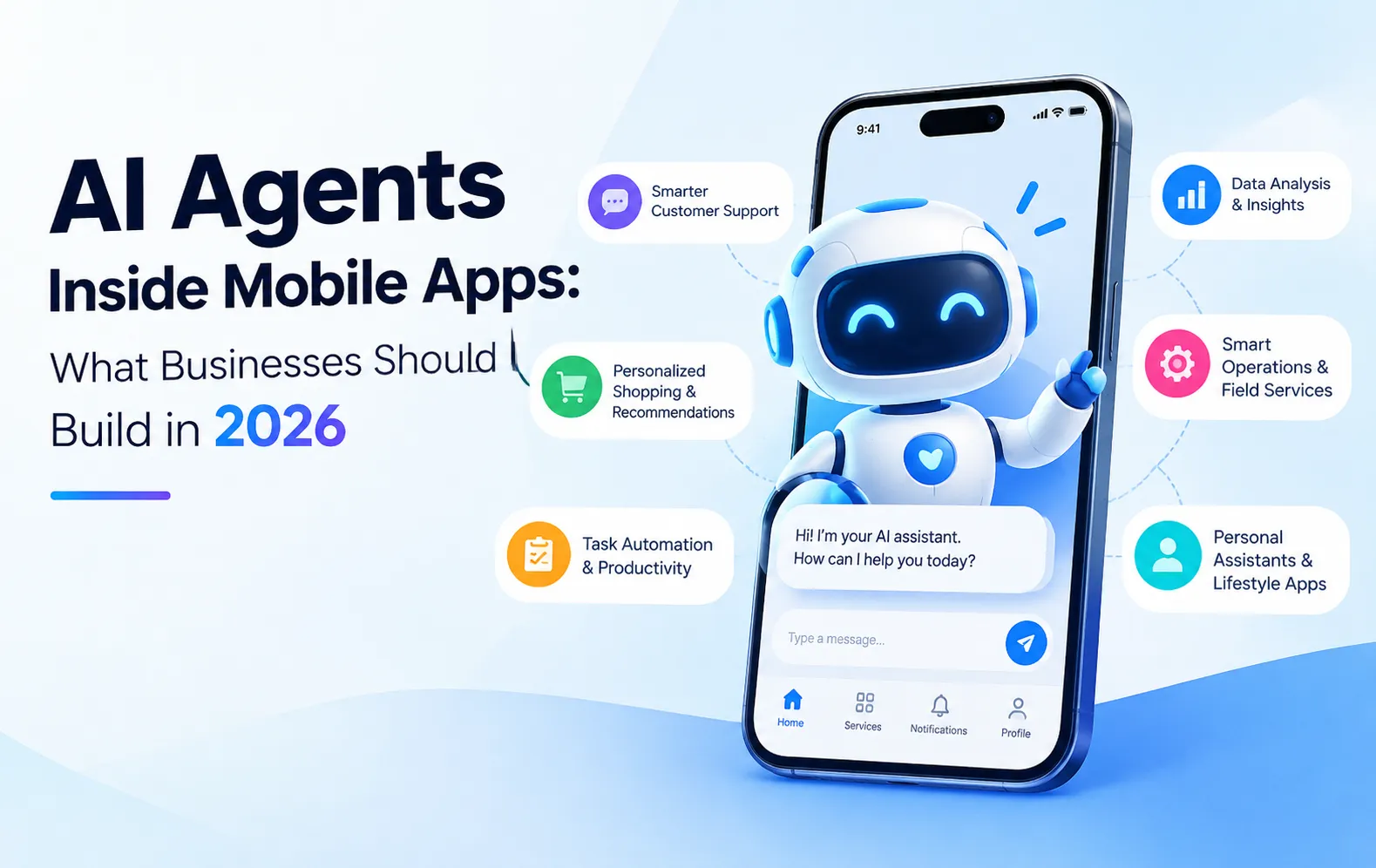
AI inside an app used to mean a chatbot widget bolted onto the side. In 2026, it's foundational—and it's not just changing what apps do, it's changing how they get built.
Agentic coding tools like GitHub Copilot Workspace and Cursor now read entire codebases and resolve issues autonomously, rather than simply autocompleting lines of code. AI has become an active participant in the development pipeline, not just a productivity add-on.
On top of that, low-code platforms are no longer a compromise. Gartner projects low-code development tools will account for 75% of new application development by 2026—up from just 40% in 2021—and 87% of enterprise developers already use these platforms today.
What this means for you: MVP timelines are compressing fast. If your content, ASO, and discovery strategy aren't ready before launch, you're leaving weeks of organic momentum on the table.
This is the shift most teams haven't fully absorbed yet.
Only 48% of app installs now come from app store search—down from 58% just two years ago. Social media and AI assistants now account for 35–40% of new app discoveries. ChatGPT alone reportedly passed a billion mobile monthly active users in May 2026, the fastest any app has ever hit that mark. And roughly 47% of people using AI search engines say they use them partly to get product and app recommendations.
Both major platforms are responding by baking AI directly into the discovery layer:
Here's the number that should worry — or excite — you: in a recent industry poll, 34% of app marketers hadn't started building an AI-visibility strategy at all, and only 6% said they already had one in place. That's a wide-open lane for anyone who moves first.
If you've watched web SEO evolve from keyword-stuffing to topic clusters and intent matching, this will feel familiar.
Translation: your app store listing needs to be treated like a content asset, not a form you fill out once at launch.
In 2026, mobile teams are committing to frameworks like Flutter, React Native, and Kotlin Multiplatform as standard practice—not a cost-cutting compromise. The typical setup: one shared module handles business logic (API calls, models, state management), while lightweight platform-specific shells handle UI polish and native integrations.
For most product teams, this simply means faster, cheaper launches across iOS and Android without sacrificing native feel.
Global mobile app revenue hit $330.61 billion in 2025 and is projected to exceed $1.2 trillion by 2035, growing at a 14% CAGR. But growth isn't coming from new smartphone adoption anymore—it's coming from depth of use and smarter monetization.
Consider this: Americans now spend an average of 5 hours and 16 minutes per day on their phones, almost entirely inside apps rather than browsers. The competitive battle has shifted from "get installed" to "stay relevant inside a crowded home screen."
If you're building or marketing a mobile app this year, here's where we'd put the budget:
The apps that win in 2026 won't be the ones with the most features. They'll be the ones that show up—in the store, in an AI assistant's answer, and in the five hours a day people already spend on their phones.
Have a project in mind? Let’s build something amazing together.
Webbitech — A Leading Web Design & Web Development Company with 15+ Years of SEO & Digital Marketing Expertise, Delivering Countless Success Stories
From idea to execution, we help businesses create high-performing websites and applications.
Start your journey today and take your brand to the next level.