Posted Date : 28 Jul 2026
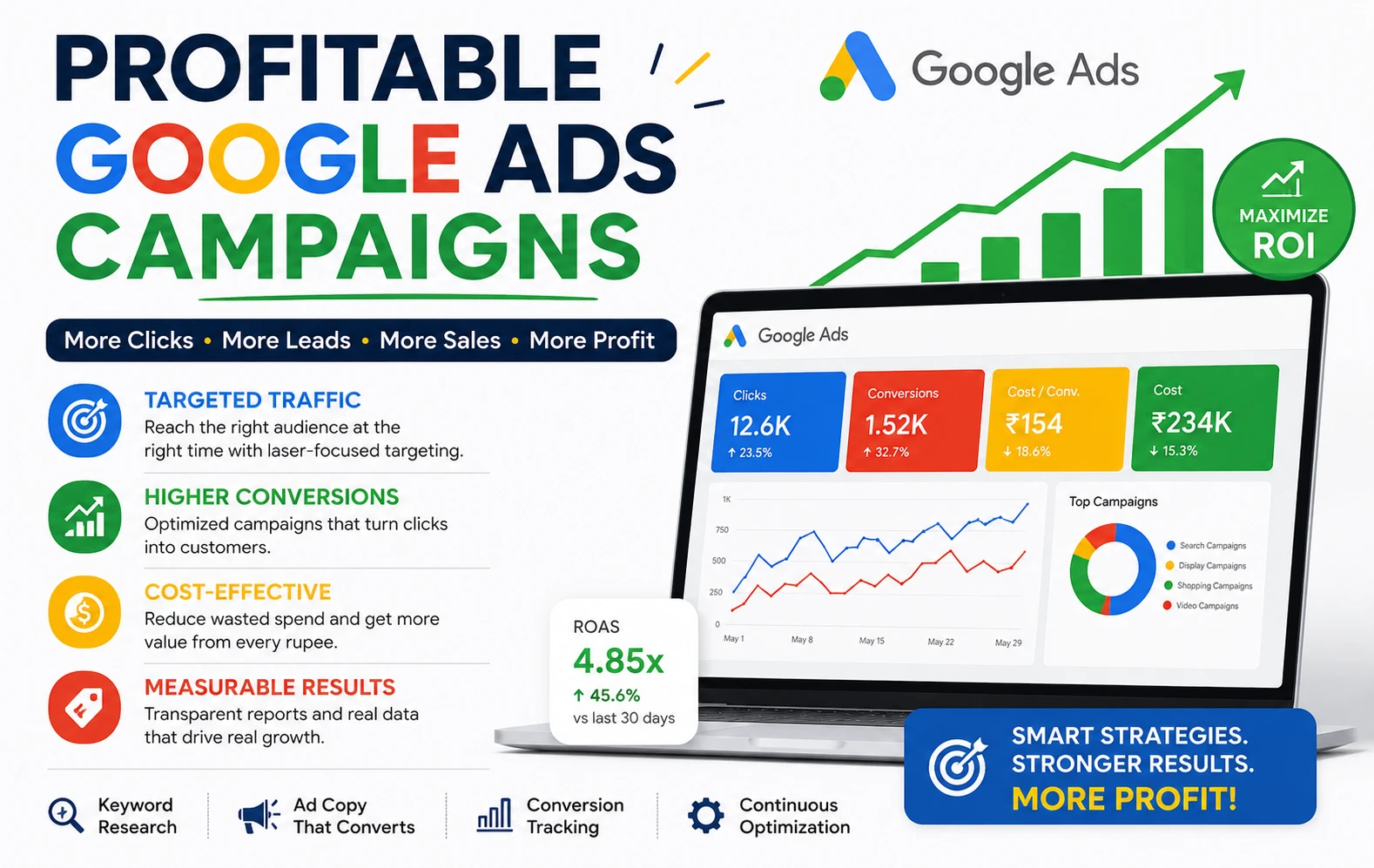
Running Google Ads in 2026 isn't about spending more — it's about spending smarter. With rising CPCs, AI-driven automation, and more competition than ever, businesses that win with Google Ads are the ones who combine strong fundamentals with modern optimization tactics. Here's a complete breakdown of how to build and run a genuinely profitable campaign this year.
Before you touch the Google Ads dashboard, define what "profitable" means for your business. Is it:
Every setting you choose later — bidding strategy, campaign type, budget allocation — depends on this single decision. Campaigns without a clear conversion goal almost always burn budget without direction.
Keyword research in 2026 is less about volume and more about intent. Focus on three keyword buckets:
Use Google Keyword Planner alongside the Search Terms Report (after 2–3 weeks of live data) to continuously refine your list.
A common mistake is dumping all keywords into one ad group. Instead, structure campaigns by:
Tighter ad groups mean more relevant ads, which directly improves Quality Score — and a higher Quality Score means lower CPC for the same ad position.
Generic ads get generic results. Every headline and description should speak directly to what the searcher typed. A few principles that still hold true in 2026:
Google's AI-driven bidding strategies (Target CPA, Target ROAS, Maximize Conversions) perform best when they have enough historical conversion data to learn from. The 2026 playbook:
Extensions aren't optional add-ons anymore—they directly influence Ad Rank and CTR. At minimum, use:
Sending all traffic to a homepage is one of the fastest ways to waste ad spend. Each ad group should point to a landing page that matches the exact intent of the keyword — same headline theme, same offer, same call to action. This alone can significantly improve conversion rate and quality score.
Profitability in Google Ads isn't a "set it and forget it" outcome. Build a weekly routine:
Set daily budgets based on your monthly target divided across active days, and monitor pacing weekly. Overspending early in the month on unqualified traffic is one of the most common reasons campaigns look "expensive" without being unprofitable — the issue is usually poor targeting, not the platform itself.
Profitable Google Ads campaigns in 2026 come down to a simple formula: tight targeting, relevant ads, matching landing pages, and disciplined weekly optimization. The businesses that treat Google Ads as an ongoing process — not a one-time setup — are the ones that consistently turn ad spend into real revenue.
Want help auditing your current Google Ads account or building a campaign structure from scratch? [Get in touch for a free consultation.]

Have a project in mind? Let’s build something amazing together.
Webbitech — A Leading Web Design & Web Development Company with 15+ Years of SEO & Digital Marketing Expertise, Delivering Countless Success Stories
From idea to execution, we help businesses create high-performing websites and applications.
Start your journey today and take your brand to the next level.