Posted Date : 19 Aug 2026
Search optimization has weathered numerous upheavals over the decades, but none quite as sweeping as the current convergence with artificial intelligence. What once resembled a fairly linear discipline, target a keyword, build a page, earn a backlink, has splintered into a multidimensional discipline where machine learning models interpret intent, generate summaries, and increasingly mediate the entire discovery journey. This shift is neither speculative nor distant; it is already redistributing traffic, altering click patterns, and forcing marketers to reconsider assumptions that held firm for nearly two decades. Grasping this new terrain requires abandoning old certainties in favor of a more adaptive, curious posture.
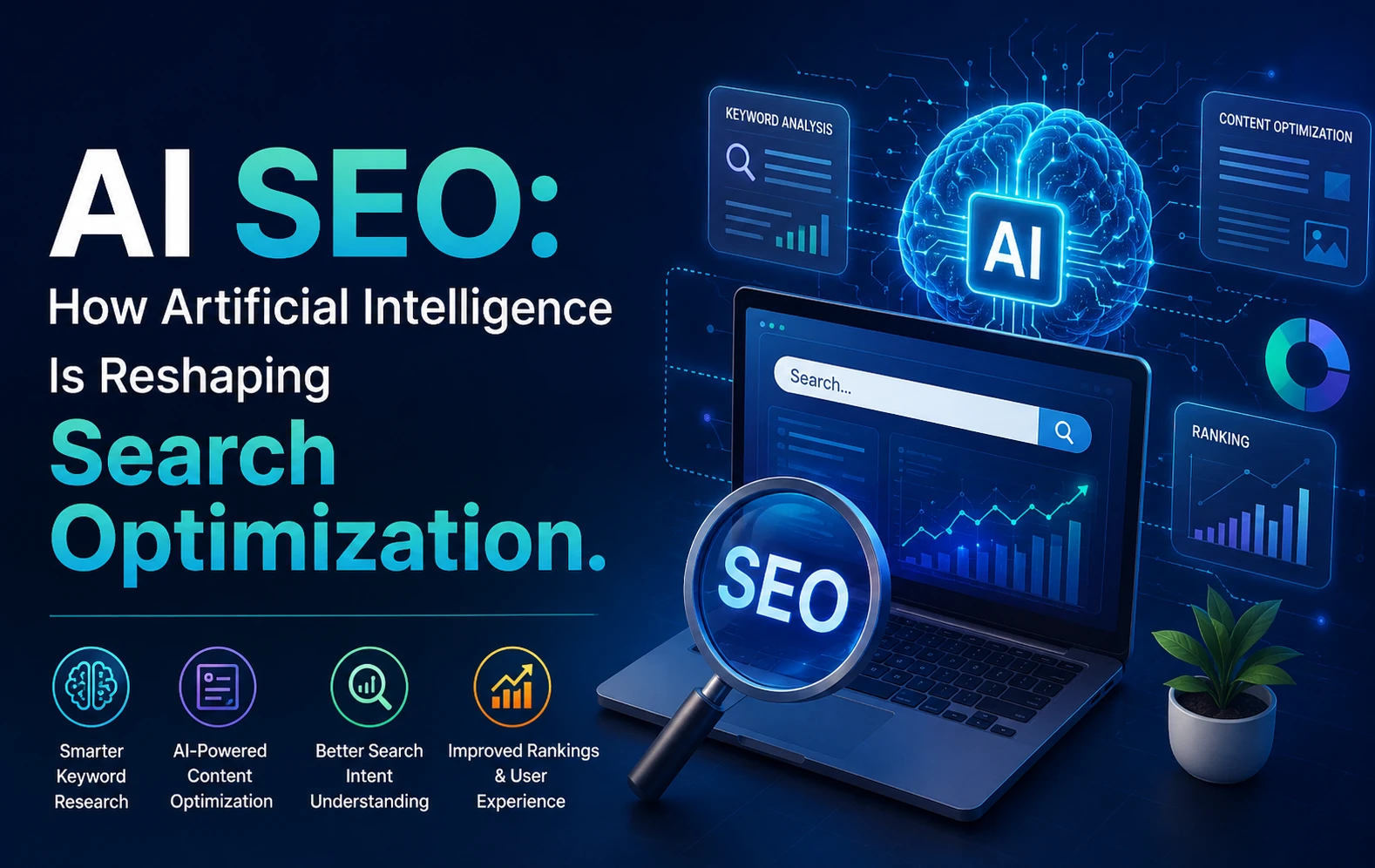
AI SEO refers to the practice of optimizing digital content for discovery, ranking, and citation within search ecosystems that are increasingly governed by machine learning, natural language understanding, and generative summarization. It encompasses two intertwined dimensions: leveraging artificial intelligence as a tool to conduct optimization work more efficiently, and optimizing content specifically for consumption by AI-driven search features such as generative overviews and conversational assistants. The discipline is not a wholesale replacement of conventional SEO but rather an evolutionary layer built atop its foundational principles.
Search engines have quietly embedded machine learning throughout their ranking infrastructure for years, but recent advances in transformer-based architectures have accelerated this transformation considerably. Ranking systems now evaluate contextual meaning rather than relying predominantly on exact-match keyword signals. This allows algorithms to interpret synonyms, colloquialisms, and even implied intent with striking nuance. The practical consequence is that content engineered around rigid keyword formulas increasingly underperforms compared to material demonstrating genuine topical fluency and depth.
A persistent anxiety circulating among marketers suggests that generative AI will render traditional optimization irrelevant, as users simply ask a chatbot for answers instead of clicking through to websites. This fear, while understandable, oversimplifies a considerably more nuanced reality. AI-generated answers still draw their underlying information from indexed, optimized content; websites that fail to rank or lack structural clarity are far less likely to be cited as sources. Rather than eliminating SEO, generative search has introduced a new layer of competition: earning citation within an AI-generated response, not merely a blue link.
Large language models, trained on vast corpora of text, function by predicting contextually appropriate sequences of language based on probabilistic patterns. When integrated into search, these models parse queries with far greater linguistic sophistication than legacy keyword-matching systems. They can disambiguate polysemous terms, infer unstated context from conversation history, and synthesize information across multiple sources into a cohesive response. For optimization practitioners, this means content must be structured with enough clarity and specificity that a model can accurately extract and represent it.
Generative overviews, AI-composed summaries appearing above traditional organic listings, have become a defining feature of the modern search results page. These summaries synthesize information from multiple sources, often without requiring the user to click through at all.
The introduction of generative overviews has measurably compressed click-through rates for informational queries, as users increasingly find satisfactory answers without leaving the results page. This phenomenon, sometimes labeled the zero-click search, demands a strategic recalibration: rather than optimizing solely for traffic volume, practitioners must now consider brand visibility and citation frequency within these summaries as legitimate success metrics in their own right.
Semantic search represents a fundamental departure from lexical matching, prioritizing conceptual relationships between words rather than their literal string equivalence. Natural language processing techniques enable search systems to recognize that "affordable dentist" and "budget-friendly dental care" express near-identical intent despite sharing no common vocabulary. This capability rewards content built around comprehensive topical coverage rather than narrow, repetitive keyword targeting, encouraging writers to address a subject with genuine thoroughness.
Traditional keyword research tools relied heavily on historical search volume data, often lagging behind emerging trends by weeks or months. AI-powered research platforms now analyze conversational query patterns, clustering related phrases by underlying intent rather than surface-level phrasing.
The most consequential shift involves prioritizing intent classification over raw volume metrics. A keyword with modest monthly searches but unambiguous commercial intent frequently outperforms a high-volume, ambiguous term. AI models excel at parsing this nuance, categorizing queries as informational, navigational, transactional, or investigational with far greater precision than manual analysis typically achieves.
Generative writing tools have democratized content production, enabling businesses of modest size to produce substantial volumes of material without proportionally scaling headcount. Used judiciously, these tools accelerate outlining, drafting, and ideation considerably.
Velocity, however, introduces risk. Content generated wholesale without human refinement often exhibits a peculiar blandness, technically coherent yet devoid of distinctive perspective or lived experience. Search engines have grown adept at identifying such homogenized output, and audiences detect its hollowness intuitively. The most effective approach treats AI as a collaborative instrument, accelerating research and structure, while preserving authentic voice, original insight, and rigorous fact-checking as irreplaceable human contributions.
Experience, expertise, authoritativeness, and trustworthiness, collectively known as E-E-A-T, have taken on heightened significance as AI-generated content proliferates across the web. Search evaluators increasingly scrutinize whether content demonstrates genuine firsthand experience or merely regurgitates aggregated information. Author credentials, transparent sourcing, and demonstrable subject-matter authority now function as critical differentiators separating substantive content from synthetic filler.
A robust ecosystem of specialized tools has emerged to support practitioners navigating this evolving landscape, spanning predictive forecasting, automated auditing, and content optimization suites.
These platforms leverage historical performance data to forecast how content changes might influence future rankings, allowing practitioners to prioritize high-impact interventions before committing resources. Rather than reactive adjustment following a ranking decline, predictive tools enable proactive, data-informed strategies.
Machine learning-driven auditing tools now scan entire site architectures within minutes, flagging crawl errors, duplicate content, and performance bottlenecks that once required painstaking manual review. This automation frees practitioners to focus cognitive energy on strategic decisions rather than exhaustive diagnostic labor.
Structured data, machine-readable annotations embedded within a webpage's code, has assumed heightened importance as AI systems attempt to parse and summarize content accurately. Schema markup clarifies entities, relationships, and attributes in a format algorithms can ingest unambiguously, reducing the likelihood of misinterpretation. Businesses implementing comprehensive markup for products, reviews, frequently asked questions, and organizational details position themselves more favorably for inclusion in AI-generated summaries and rich results.
Conversational AI platforms, functioning increasingly as independent discovery channels, source their responses from indexed web content, making optimization for these systems a distinct discipline. Content structured with clear, concise, directly quotable answers near the top of a page, followed by supporting elaboration, tends to perform favorably within these environments. Ambiguous phrasing or excessive preamble before addressing the core question diminishes the likelihood of citation.
Answer engine optimization has emerged as a distinct discipline within the broader SEO umbrella, focused specifically on securing citation and representation within AI-generated answers rather than traditional ranking positions. This involves structuring content around discrete, well-defined questions, employing declarative sentence construction, and ensuring factual claims are easily verifiable and attributable. AEO does not replace conventional optimization but functions as a complementary layer addressing an increasingly significant discovery surface.
Voice-activated assistants have normalized longer, more conversational query patterns compared to the terse, fragmented phrasing typical of typed searches. Optimizing for this modality requires anticipating natural spoken phrasing, incorporating question-based headers, and prioritizing concise, direct answers suitable for auditory delivery. The overlap between voice optimization and answer engine optimization is substantial, as both prioritize clarity and directness over keyword density.
Beyond content considerations, artificial intelligence increasingly automates historically labor-intensive technical processes: identifying broken links, optimizing image compression, generating alt text, and even suggesting internal linking structures based on topical relevance modeling. This automation reduces the operational burden on smaller teams, allowing modest organizations to maintain technical hygiene previously achievable only through dedicated specialist labor.
Despite considerable efficiency gains, wholesale dependence on artificial intelligence introduces meaningful risk. Automated content generation, deployed without editorial scrutiny, can propagate factual inaccuracies at scale, damaging credibility. Algorithmic recommendations, while often sound, occasionally reflect training data biases or fail to account for nuanced brand voice considerations that a human strategist would intuitively recognize.
Artificial intelligence excels at pattern recognition and scale but remains fundamentally limited in judgment, ethical reasoning, and genuine creative insight. Human practitioners contribute irreplaceable value through strategic prioritization, nuanced brand storytelling, and the discernment required to evaluate when algorithmic suggestions genuinely serve business objectives versus when they merely optimize for superficial metrics. The most resilient strategies treat AI as an augmentative collaborator rather than an autonomous replacement.
Traditional metrics, organic traffic, keyword rankings, and conversion rates, remain relevant but now require supplementation with newer indicators: citation frequency within AI overviews, brand mention volume across generative platforms, and share of voice within conversational search contexts. Practitioners who cling exclusively to legacy metrics risk underestimating genuine visibility gains occurring within these emerging surfaces.
The scalability of AI-generated content introduces genuine ethical questions regarding transparency, originality, and the potential saturation of the web with derivative, low-value material. Responsible practitioners disclose AI involvement where appropriate, prioritize genuine value creation over volume-driven publishing schemes, and resist manipulative tactics designed to exploit algorithmic vulnerabilities rather than serve authentic user needs.
Organizations seeking resilience amid this transition should audit existing content for genuine depth and originality, implement comprehensive structured data, and cultivate demonstrable subject-matter expertise through author transparency and credentialing. Equally important is diversifying measurement frameworks to capture visibility across generative platforms rather than relying exclusively on traditional click-based metrics. Incremental, deliberate adaptation consistently outperforms reactive, panic-driven overhaul.
Artificial intelligence has not rendered search optimization obsolete; it has instead layered new complexity and opportunity atop an already intricate discipline. The businesses poised to thrive within this evolving landscape are those willing to embrace AI as a powerful collaborative instrument while steadfastly preserving the human judgment, authentic expertise, and ethical rigor that machines cannot replicate. AI SEO, properly understood, represents not a rupture from established practice but its natural, sophisticated continuation.

Have a project in mind? Let’s build something amazing together.
Webbitech — A Leading Web Design & Web Development Company with 15+ Years of SEO & Digital Marketing Expertise, Delivering Countless Success Stories
From idea to execution, we help businesses create high-performing websites and applications.
Start your journey today and take your brand to the next level.