Posted Date : 11 Aug 2026
Search behavior has shifted. Users no longer scroll through ten blue links; they ask a question and expect a synthesized answer. Answer Engine Optimization, or AEO, governs whether your content becomes that answer or disappears into obscurity. Brands that once thrived on conventional SEO tactics are discovering that ranking on page one means little if an AI-generated answer box already satisfied the searcher's query. This shift is not incremental. It is a wholesale reconfiguration of how visibility gets earned. Understanding the missteps that sideline otherwise excellent content is the first step toward reclaiming a seat at the table.
Before dissecting mistakes, it helps to establish what AEO actually entails and why it operates on different mechanics than legacy search optimization.
Traditional SEO optimizes for rankings within a list. AEO optimizes for extraction and synthesis. Large language models and AI-driven search engines parse content, distill it, and reassemble fragments into a cohesive response. This means your prose must be excerptable. Dense paragraphs that bury the answer beneath throat-clearing introductions rarely get selected. Instead, content that states a clear proposition early, then substantiates it, aligns naturally with how these systems extract meaning.
Answer engines rely on a blend of semantic relevance, source credibility, and structural clarity. They favor content with unambiguous entity definitions, verifiable facts, and logical hierarchies. A page riddled with vague pronouns or unresolved references confuses the parsing layer, reducing the likelihood of citation. Recognizing this selection logic reframes content creation as an exercise in machine-readable clarity, not merely human persuasion.
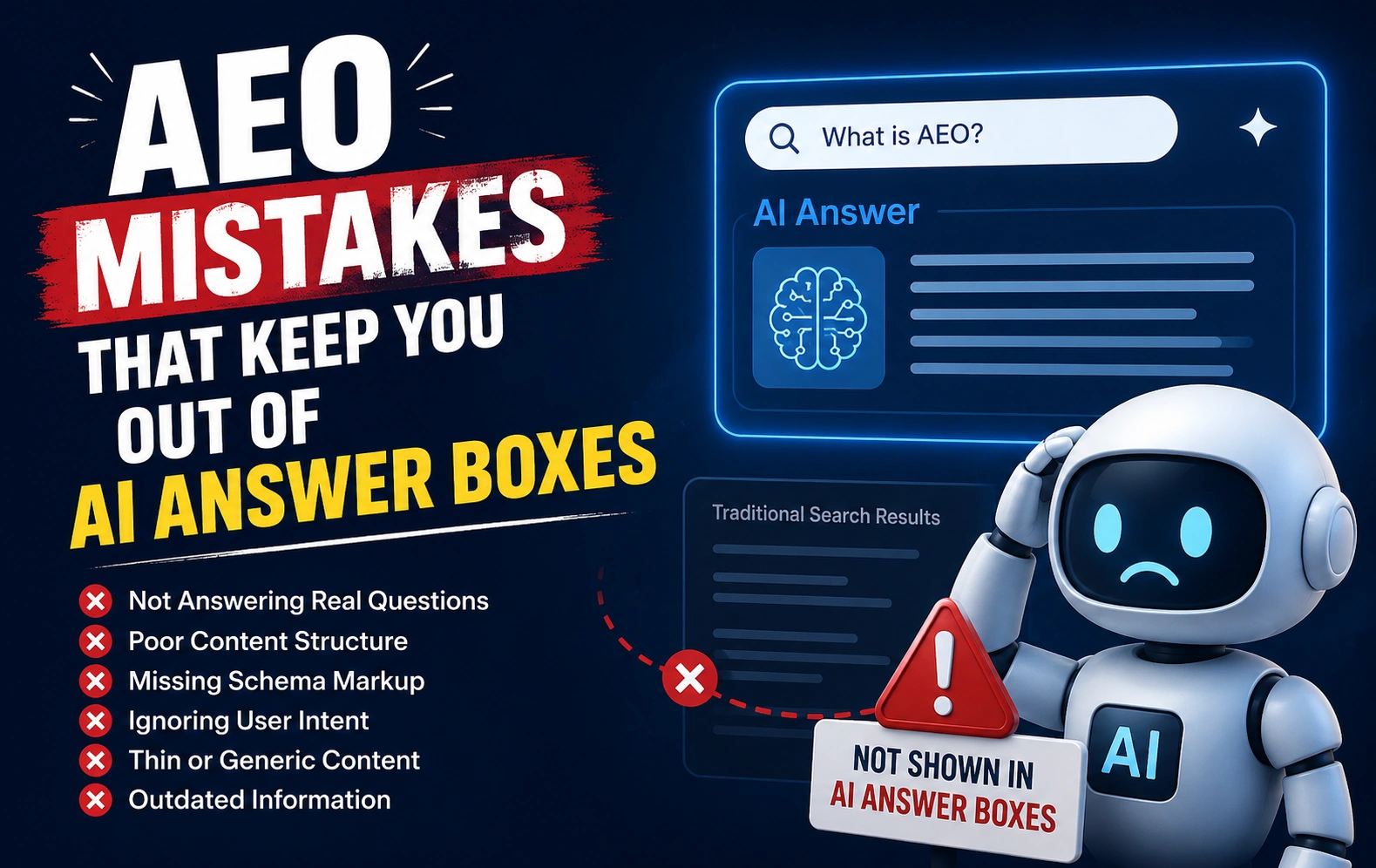
Many publishers still treat schema markup as optional decoration. This is a costly miscalculation. Structured data acts as a translation layer, converting ambiguous prose into discrete, machine-parsable facts. Without FAQ schema, HowTo schema, or Article schema, an answer engine must infer context rather than read it directly. Inference introduces error, and error reduces citation likelihood. Implementing schema is not glamorous work, but it is foundational infrastructure that determines whether your content is even eligible for consideration.
A recurring blunder involves optimizing for a keyword rather than the underlying need behind it. A query like "best CRM for freelancers" carries comparative intent, not definitional intent. Content that opens with a dictionary-style explanation of what a CRM is misses the mark entirely. Answer engines are increasingly adept at distinguishing informational, transactional, and comparative intent, and they penalize mismatches by simply excluding the content from consideration.
Keyword stuffing, a relic many assumed extinct, persists in subtler forms. Awkward repetition of a target phrase disrupts the natural cadence that language models rely on for coherence scoring. Ironically, this practice, once used to game older algorithms, now actively undermines AEO performance because it degrades readability and signals low-quality authorship.
Voice search and chat-based interfaces have normalized longer, more conversational queries. "What is the best way to reduce churn for a SaaS startup" reads nothing like the clipped keyword phrases of a decade ago. Content that fails to anticipate this phrasing, opting instead for terse, fragment-style headings, misses valuable matching opportunities. Restructuring headings as natural questions, and answering them directly beneath, significantly improves alignment with how people now phrase their curiosity.
A single, isolated article rarely earns sustained citation. Answer engines weigh topical depth, favoring domains that demonstrate comprehensive coverage of a subject area. Publishing one article on AEO while neglecting adjacent topics like schema implementation, entity optimization, or conversational search leaves gaps that competitors with fuller content clusters will fill instead.
Entities, the people, organizations, products, and concepts referenced in your content, must be clearly connected. Vague references without proper linking or contextual grounding weaken the semantic web that answer engines use to validate credibility. Explicitly naming entities and their relationships, rather than relying on implied context, strengthens machine comprehension.
Featured snippets remain a precursor to many AI-generated answers, and their formatting conventions still matter. Content lacking concise, 40-to-60-word direct answers near the top of a section, followed by supporting elaboration, struggles to be selected as a snippet source. Numbered lists, definition-style paragraphs, and tight summary statements consistently outperform sprawling, unstructured prose in this regard.
Experience, Expertise, Authoritativeness, and Trustworthiness continue to influence which sources answer engines are willing to cite. Anonymous content, absent author bylines, or a lack of verifiable credentials all diminish trust signals. Publishers who omit author bios, publication dates, or citations to primary sources inadvertently signal low reliability, even when the underlying information is accurate. Bolstering these signals is not cosmetic; it directly affects citation eligibility.
Technical sluggishness remains an underappreciated barrier. If a crawler or rendering agent cannot efficiently access and process a page, the content within it becomes functionally invisible, regardless of quality. Poor Core Web Vitals scores, particularly around load performance, continue to correlate with reduced visibility across both traditional and AI-driven search surfaces.
Blocked resources, orphaned pages, and misconfigured robots directives quietly sabotage AEO efforts. A brilliant article buried behind a crawl block is inert. Regular technical audits, verifying that critical content remains accessible to crawlers, should be treated as a non-negotiable maintenance task rather than a one-time setup step.
Answer engines increasingly cross-reference brand mentions across multiple domains to assess consistency and reputation. Discrepancies in naming conventions, outdated information, or contradictory claims across different sites erode the confidence these systems place in any single source. Maintaining consistent messaging across owned properties, press coverage, and third-party citations reinforces a coherent brand narrative that machines can trust.
Text-only strategies leave value on the table. Answer engines increasingly draw from images, video transcripts, and audio content to construct richer responses. Neglecting alt text, video captions, or transcript accessibility limits the surface area available for citation. Diversifying content formats, while ensuring each format remains machine-readable, expands the pathways through which your material can be surfaced.
Many teams still measure success exclusively through traditional ranking trackers, leaving AI answer visibility unmeasured. Without monitoring how often your brand appears within AI-generated responses, you operate blind to an increasingly significant portion of discovery traffic. Emerging tools that track AI citation frequency should be incorporated into regular reporting cadences alongside conventional analytics.
A methodical audit should evaluate existing pages against the mistakes outlined above: missing schema, misaligned intent, thin topical clusters, weak trust signals, and technical obstructions. Prioritizing high-traffic or high-value pages for remediation first yields the fastest measurable impact.
Once gaps are identified, a phased roadmap, addressing technical fixes first, followed by structural content improvements, then expanding topical depth, ensures sustainable progress rather than scattered, reactive edits. Treating AEO as an ongoing discipline, not a one-time project, positions a brand for durable visibility as answer engines continue to evolve.
The mistakes outlined here are neither exotic nor difficult to remedy individually, yet their cumulative effect determines whether your content earns a place inside AI-generated answers or fades into the unindexed periphery. Addressing structured data, intent alignment, topical authority, and technical health simultaneously, rather than piecemeal, offers the clearest path toward consistent inclusion in AI answer boxes. The organizations that treat AEO as a rigorous discipline today will define the visibility standards that others scramble to match tomorrow.
Have a project in mind? Let’s build something amazing together.
Webbitech — A Leading Web Design & Web Development Company with 15+ Years of SEO & Digital Marketing Expertise, Delivering Countless Success Stories
From idea to execution, we help businesses create high-performing websites and applications.
Start your journey today and take your brand to the next level.