Posted Date : 02 Jul 2026
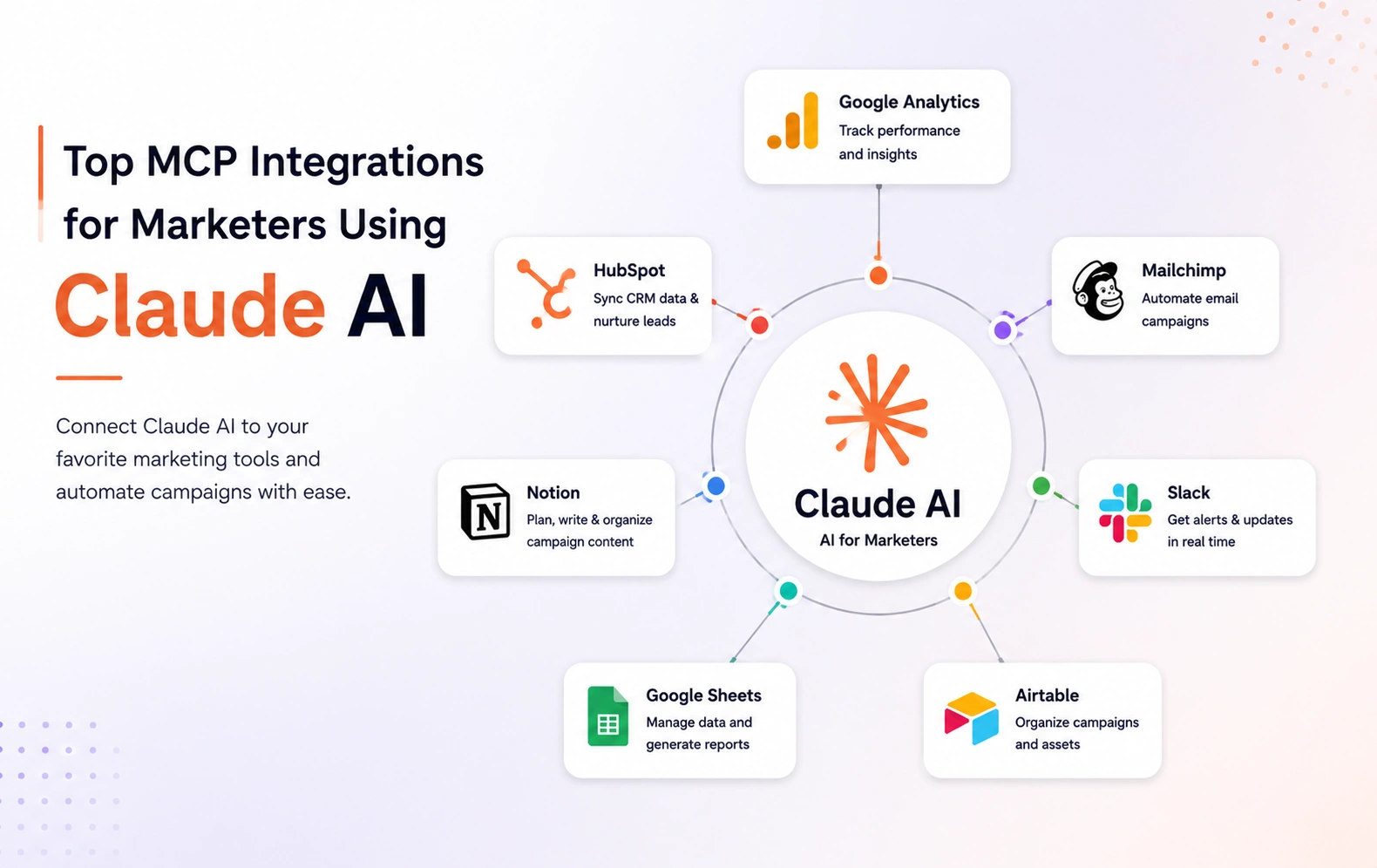
Claude's connector directory has grown past 200 integrations, and more marketing platforms are shipping official MCP servers every month. That's great news, but it also means "just connect everything" isn't a strategy — it's a way to end up with a cluttered settings page and no idea which connector is actually doing anything for you.
This roundup focuses on the integrations that matter most for marketing work specifically, organized by category, with a plain read on what each one is actually good for.
The connector marketing and sales teams reach for first. Once connected via OAuth, Claude can read contact and deal records, pull engagement history, and create or update contacts, deals, and tasks. An admin needs to enable it org-wide before individual users can turn it on — standard for most Team and Enterprise-tier connectors.
Best for: pulling pipeline context into content and campaign planning, logging activity without switching tabs.
One of the more fully built-out marketing connectors available. Claude can pull campaign and flow performance, look up customer profiles and segments, and — notably — help draft new campaigns and propose segments grounded in real account data. It's a read/write connector, meaning it can act on your data, not just report on it. The honest limitation: it only works inside a conversation you actively start. It doesn't watch for events or run in the background — for that, you'd need a scheduled task or a dedicated automation layer on top.
Best for: weekly performance digests, flow audits, and campaign drafting for ecommerce and lifecycle marketing teams.
Meta's official connector, launched in 2026, covers performance reporting, campaign management, catalog management, and account diagnostics — around 30 tools in total. New campaigns and ad sets are created paused by default, which is the safety detail that makes this one comfortable to use for actual campaign building, not just reporting.
Best for: weekly recaps, flagging underperforming ad sets, and staging new campaign structures for review.
There's no single official hosted connector the way Meta has one — options range from Google's own self-hosted, open-source server (more setup, full control) to third-party hosted connectors that handle OAuth and quota management for you. Worth choosing based on how much setup your team wants to own versus hand off.
Best for: campaign audits, zero-conversion flagging, and search term analysis, once you've picked a setup path that matches your team's technical comfort.
Several SEO tools now offer either an official OAuth connector or a community-maintained MCP server, giving Claude access to keyword research, backlink data, and competitive intelligence without an export step. Community servers typically require you to supply your own API key and run locally, while official connectors are simpler OAuth setups.
Best for: content briefs grounded in live keyword data, competitive gap analysis, and site audits.
Pairing a GA4 connector with an ad platform connector is one of the more useful combinations available — it lets Claude reconcile ad spend against actual on-site conversion and attribution data in a single conversation, instead of you manually cross-referencing two dashboards.
Best for: attribution sanity checks and unified reporting across paid and organic channels.
Lets Claude search messages and pull context from channels without you leaving the conversation — useful for surfacing what a team already discussed before drafting a brief or recap.
A common home for content calendars, brand guidelines, and campaign docs. Once connected, Claude can pull from and write to Notion pages directly, which is handy for keeping a single source of truth instead of duplicating content into chat.
Read and update tasks conversationally — pull what's overdue, draft a status update, or create new tasks from a planning conversation, without opening the Asana app.
Anthropic's own first-party connectors, requiring no setup beyond logging in. Useful as connective tissue across almost any marketing workflow: pulling a doc, checking a meeting, or drafting an email informed by both.
With this many options, the honest advice is: don't connect all of them on day one. A reasonable starting stack for most marketing teams looks like:
That's enough to run genuinely useful cross-tool workflows — comparing pipeline data against campaign performance, or turning a Slack thread into a documented brief — without managing more connections than your team can actually keep track of.
Several connectors on this list — Klaviyo, Meta Ads, HubSpot — can both read your data and take action on it. That's where most of the real time savings come from, but it's also where a review habit matters most. Most well-built connectors default to safe behavior (paused campaigns, draft-only content), but that default is a starting point, not a substitute for someone checking the output before it goes live.
Sources referenced: Klaviyo and Anthropic's 2026 announcements on the expanded Klaviyo MCP connector, Meta for Business's Ads AI Connectors announcement, Anthropic's connector directory documentation, and independent 2026 reporting on marketing-specific MCP integrations.
Have a project in mind? Let’s build something amazing together.
Webbitech — A Leading Web Design & Web Development Company with 15+ Years of SEO & Digital Marketing Expertise, Delivering Countless Success Stories
From idea to execution, we help businesses create high-performing websites and applications.
Start your journey today and take your brand to the next level.