For Business Enquiry: +91 97892 39293
WEBBITECH

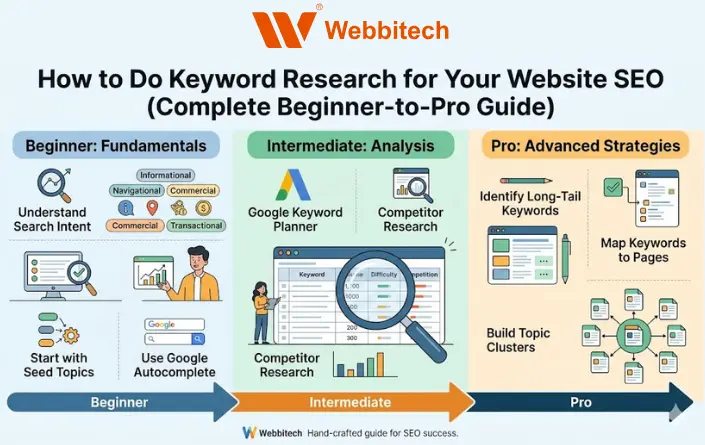
How to Do Keyword Research for Your Website SEO (Complete Beginner-to-Pro Guide)

How to Do Keyword Research for Your Website SEO (Complete Beginner-to-Pro Guide)

Keyword research is the foundation of successful SEO. If you want your website to rank higher on Google, attract the right audience, and generate qualified leads, learning how to find the right keywords is the first step. Modern SEO now prioritizes search intent, topic relevance, and semantic depth, not just exact-match phrases.

In simple terms, keyword research means discovering the words and questions your target customers type into Google when they need a product, service, or answer.

For example, if you run a website development company, your potential clients may search for terms like

When your website content is built around these real search terms, Google understands your relevance and is more likely to rank your pages.

1) Start With Your Business Topics

Begin with the main services or topics your website focuses on.

Ask:

  • What services do I offer?
  • What problems do my customers face?
  • What words would they use to search for my service?

If your company offers digital marketing, your seed topics may include:

  • SEO services
  • social media marketing
  • website development
  • Google Ads management
  • local SEO

These are called seed keywords. They help you expand into more specific search opportunities.

2) Use Google Suggestions

One of the easiest free keyword research methods is Google itself.

Type your service into Google and note the following:

  • autocomplete suggestions
  • People Also Ask questions
  • related searches at the bottom
  • AI Overview subtopics
  • local pack phrases

These show what real users are actively searching.

Example:
Typing "SEO company" may reveal the following:

These long-tail keywords often convert better because they reflect specific intent.

3) Analyze Search Intent

This is where most websites fail.

Do not choose keywords only because they have high search volume. Instead, understand why the user is searching.

There are 4 major types:

  • Informational: how to improve website SEO
  • Navigational: Google Search Console login
  • Commercial: best SEO tools for keyword research
  • Transactional: hire SEO agency in India

If your goal is leads, prioritize commercial and transactional keywords for service pages.

4) Check Keyword Difficulty and Volume

Use tools like:

  • Google Keyword Planner
  • Ahrefs
  • SEMrush
  • Ubersuggest
  • Keyword Surfer
  • Google Search Console

Look for:

  • monthly search volume
  • competition level
  • CPC value
  • trend stability
  • keyword variations

A smart strategy balances the following:

  • high-intent, low-competition keywords
  • medium-volume service keywords
  • location-based local keywords

This improves ranking speed and ROI.

5) Focus on Long-Tail Keywords

Long-tail keywords are longer and more specific.

Examples:

  • how to do keyword research for local SEO
  • best keyword research tips for service websites
  • SEO keyword research for web development company

These are easier to rank for and usually bring users closer to conversion.

6) Spy on Competitor Keywords

Search your main service keyword and study the top-ranking competitors.

Check:

  • their page titles
  • H1 headings
  • FAQ sections
  • blog categories
  • supporting keywords
  • internal links

This reveals keyword gaps and content opportunities.

7) Build Topic Clusters

Modern SEO works better when you build topic clusters instead of isolated pages.

Example cluster:

Main page: Keyword Research for SEO
Supporting blogs:

  • free keyword research tools
  • local SEO keyword ideas
  • competitor keyword analysis
  • keyword mapping for landing pages
  • how to find low-competition keywords

This builds topical authority and improves AI search visibility.

8) Map Keywords to the Right Pages

Do not target every keyword on one page.

Use this structure:

  • Homepage → brand + core services
  • Service pages → transactional keywords
  • Blog pages → informational keywords
  • Location pages → local SEO terms
  • FAQ pages → question keywords

This prevents keyword cannibalization.


Keyword research is not about stuffing keywords into pages. It is about understanding your audience, their intent, and the topics Google expects to see.

The best SEO results come from choosing keywords that are:

  • relevant to your business
  • aligned with search intent
  • realistically rankable
  • mapped to the correct pages
  • supported by strong content clusters

When done correctly, keyword research helps your website attract better traffic, improve rankings, and generate more business consistently.

Recent Post

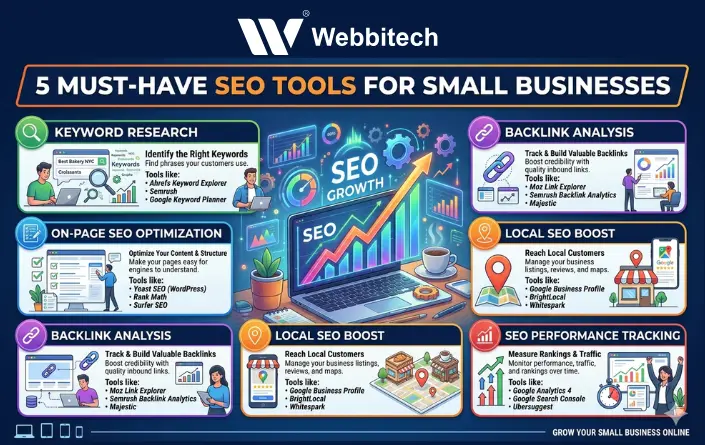
5 Must-Have SEO Tools for Small Businesses

5 Must-Have SEO Tools for Small Businesses

How to Do Keyword Research for Your Website SEO (Complete Beginner-to-Pro Guide)

How to Do Keyword Research for Your Website SEO (Complete Beginner-to-Pro Guide)

Top 10 Mobile App Development Companies in Chennai 2026

Top 10 Mobile App Development Companies in Chennai 2026

Top 10 Web Designing Companies in Bangalore 2026

Top 10 Web Designing Companies in Bangalore 2026

Top 10 Web Designing Companies in Coimbatore 2026

Top 10 Web Designing Companies in Coimbatore 2026

WhatsApp Webbitech Get Free Consulting